Stop Estimating with Sold-Out Plants: The Hidden Cost of "Ghost Stock"
You just won a massive commercial landscape bid. It feels great.
You pull up the spreadsheet to order the 100 Red Maples you quoted. You call your trusted grower to place the order.
Then, you hear the worst words in this industry: "Sorry, we sold out of those last week."
Panic sets in. You have a signed contract. You have to find those trees. You finally find them at a different nursery, but they cost $40 more per tree.
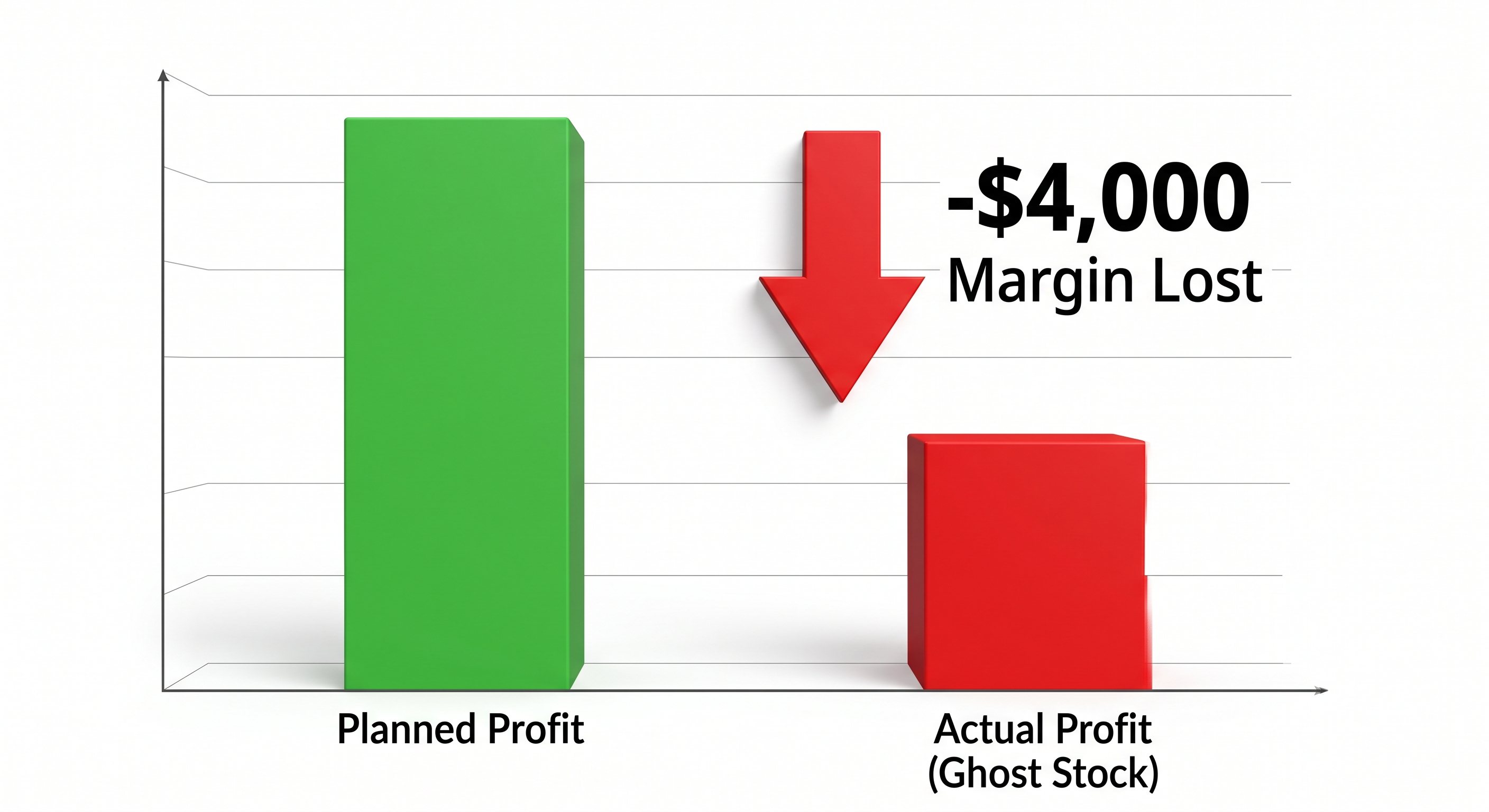
Just like that, $4,000 in profit is gone. You are working for free.
This happens every day to great estimators. It is called bidding on "Ghost Stock," and it is the fastest way to ruin your margins.
What is Ghost Stock?
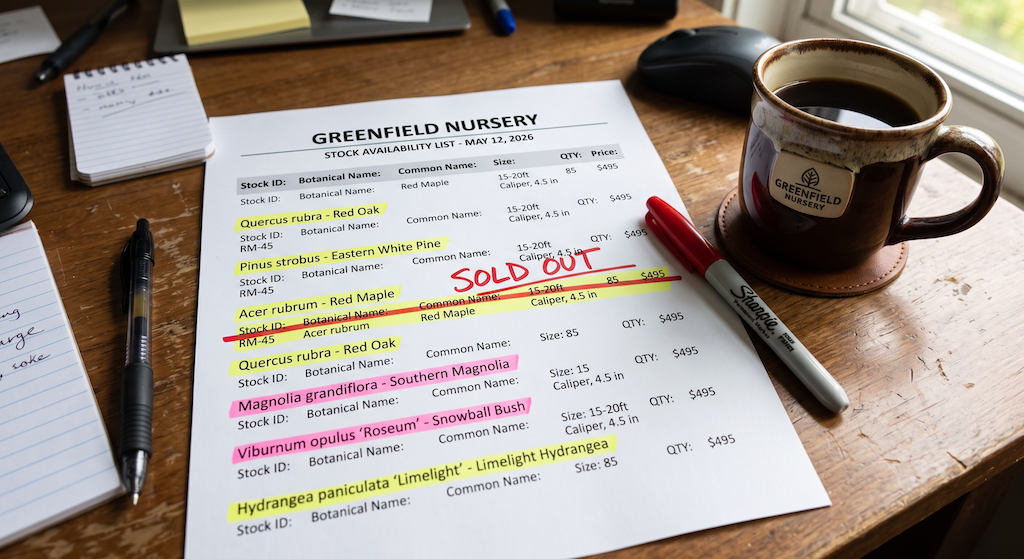
Ghost stock means plants that show up on a nursery’s availability list, but do not actually exist in the field.
Why does this happen? None of your suppliers are doing it on purpose.
The truth is, counting plants is hard. Growers usually only count their physical inventory a few times a year. In between those counts, plants die. Weather ruins crops. Another contractor swoops in and buys 500 shrubs in one afternoon.
If you are using a PDF or a printed spreadsheet from last month to build your bid, you are guessing. You are quoting plants that are already dead or sold. You are bidding on ghosts.
The Cost of Guessing
When you bid on ghost stock, two bad things happen:
You lose your profit. When the plants you quoted are gone, you have to scramble. You usually have to buy from a more expensive supplier just to get the job done on time. You eat the cost, not the client.
You risk rejection. If you have to swap a plant size or a specific cultivar at the last minute because the original one is gone, the landscape architect might reject it. That causes massive delays. You cannot afford to build $100,000 bids using old data.
How to Fix It (Without Losing Your Suppliers)
The only way to beat ghost stock is to bid using the freshest data possible. But comparing new lists from five different growers every single week takes hours. Growers may name their plants differently. Every list has its own unique layout.
You do not have time to do that math and translation by hand.
That is exactly why we built Nurlogix.
Nurlogix is a private translation tool for your plant lists. You take the unique lists from the suppliers you already trust, and you drop them into our system.
We translate all the Latin names, fix the sizes, and line up the prices side-by-side.
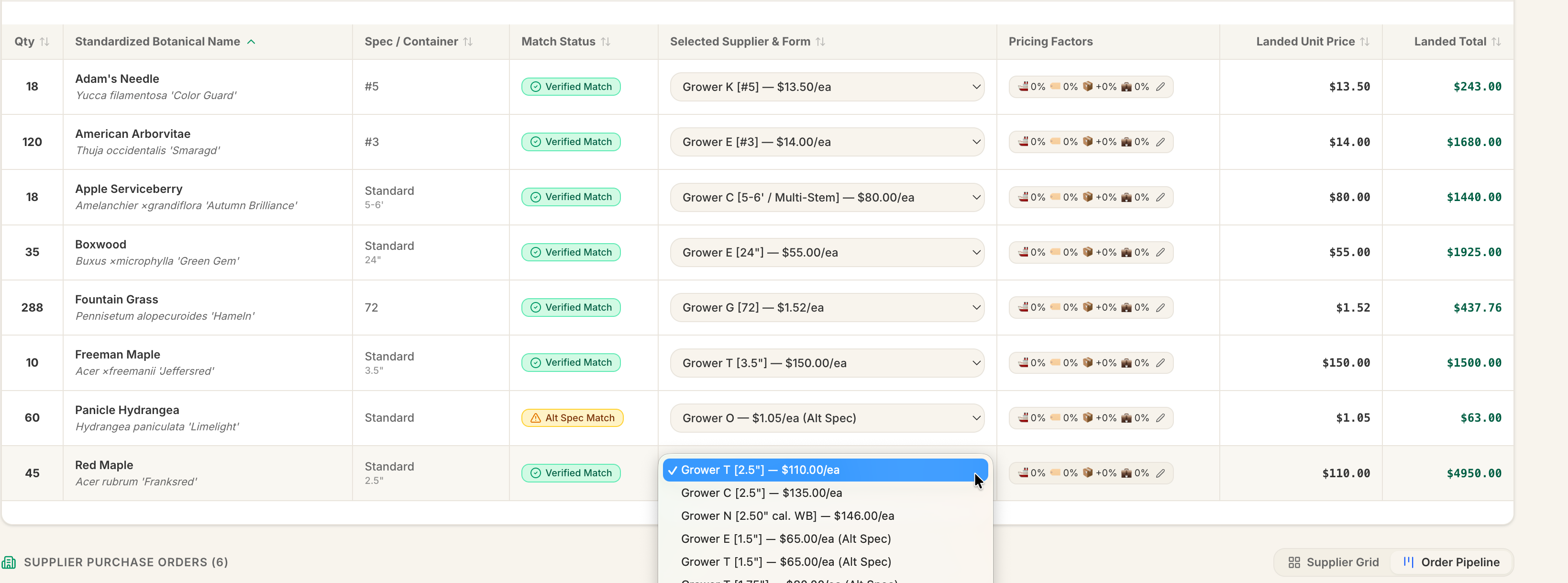
You do not have to buy plants from a random middleman. You keep your suppliers and your discounts. You just get to see exactly who actually has the plant on their latest list, and who has the best price.
When you bid with fresh data, you stop guessing. You finish bids in minutes, and you keep your profit.
Stop leaving money on the table.
If you are still doing this math by hand, you are probably paying more than you need to.
Want to see how much margin you are losing to ghost stock? Let us show you for free.
Send us 3 of your latest supplier availability lists. We will run them through Nurlogix, standardize them, and send you a spreadsheet showing exactly where your suppliers overlap on plant and size and show you who has the best price.
Let us build your first price comparison — free.
Upload up to 3 supplier lists, and we'll set up your private price comparison list free.